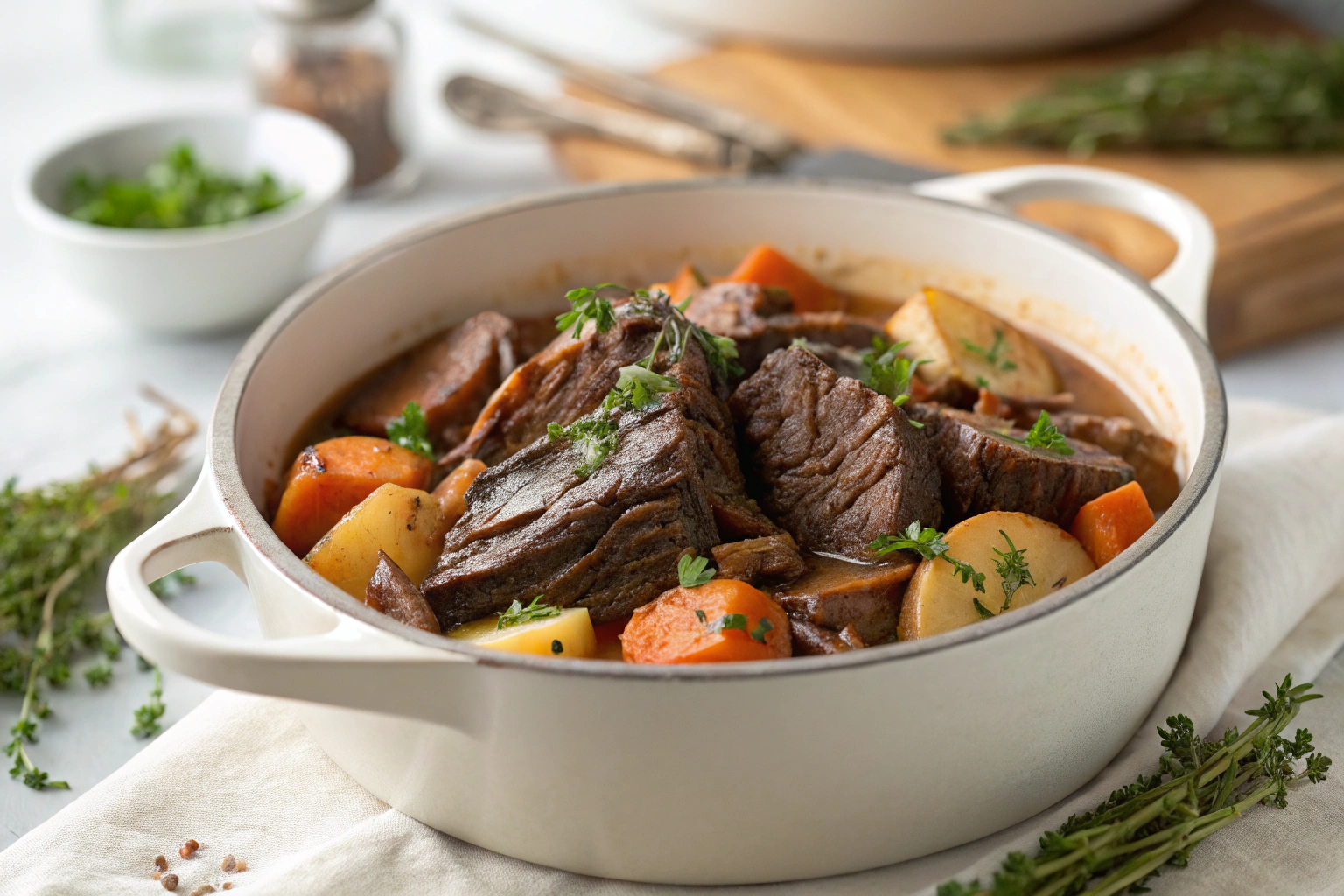
There’s something magical about coming home to the aroma of a perfectly cooked pot roast filling your kitchen. This classic slow cooker pot roast transforms an affordable cut of beef into a fork-tender, melt-in-your-mouth masterpiece surrounded by caramelized vegetables and a rich, savory gravy. It’s the ultimate Sunday dinner that brings families together around the table.
This hearty beef dinner requires minimal hands-on time, making it perfect for busy weeknights or leisurely weekend meals. The slow cooking process breaks down the tough connective tissues in the meat, resulting in incredibly tender beef that practically falls apart at the touch of a fork. Combined with sweet carrots, earthy potatoes, and aromatic herbs, this comfort food classic delivers both nutrition and satisfaction in every bite.
Whether you’re feeding a hungry family or meal-prepping for the week ahead, this crockpot pot roast is a reliable recipe that never disappoints. The best part? Your slow cooker does all the heavy lifting while you go about your day.
Why This Pot Roast Recipe Works
The secret to an exceptional pot roast lies in three key elements: choosing the right cut of meat, proper seasoning, and low-and-slow cooking. Chuck roast is ideal because its marbling and connective tissue break down beautifully during the extended cooking time, creating that signature tender texture we all crave.
By searing the meat before slow cooking, we develop a deep, caramelized crust that adds complex flavors to the final dish. The combination of beef broth, tomato paste, and aromatic vegetables creates a naturally rich sauce without any artificial additives or unhealthy ingredients.
This recipe also packs impressive nutritional value. Beef provides high-quality protein, iron, zinc, and B vitamins, while the root vegetables contribute fiber, vitamins A and C, and essential minerals. It’s a complete, balanced meal that nourishes your body while satisfying your taste buds.
Ingredients
For the Roast:
- 3 to 4 pounds beef chuck roast (Halal-certified)
- 2 tablespoons olive oil or avocado oil
- 1 teaspoon sea salt
- 1 teaspoon black pepper
- 1 teaspoon garlic powder
- 1 teaspoon onion powder
- 1/2 teaspoon dried thyme
- 1/2 teaspoon dried rosemary
For the Vegetables:
- 1 pound baby potatoes or Yukon gold potatoes, halved
- 4 large carrots, peeled and cut into 2-inch pieces
- 3 medium parsnips, peeled and cut into 2-inch pieces
- 2 medium yellow onions, cut into wedges
- 4 cloves garlic, minced
- 2 celery stalks, cut into 2-inch pieces
For the Cooking Liquid:
- 2 cups low-sodium beef broth (Halal-certified)
- 2 tablespoons tomato paste
- 2 tablespoons balsamic vinegar
- 1 tablespoon Worcestershire sauce (Halal-certified, alcohol-free)
- 2 bay leaves
- 3 sprigs fresh thyme (or 1 teaspoon dried)
- 3 sprigs fresh rosemary (or 1 teaspoon dried)
For the Gravy (Optional):
- 3 tablespoons cornstarch
- 3 tablespoons cold water
- Salt and black pepper to taste
Instructions
Step 1: Prepare the Beef
Pat the chuck roast completely dry with paper towels. This step is crucial for achieving a good sear. In a small bowl, combine the salt, black pepper, garlic powder, onion powder, dried thyme, and dried rosemary. Rub this seasoning mixture generously all over the roast, covering all sides.
Step 2: Sear the Meat
Heat the olive oil in a large skillet over medium-high heat. Once the oil is shimmering and hot, carefully place the seasoned roast in the pan. Sear for 3-4 minutes on each side until a deep golden-brown crust forms. Don’t move the meat around—let it develop that flavorful crust. This step adds tremendous depth to the final dish.
Step 3: Layer the Vegetables
While the meat is searing, prepare your slow cooker by arranging the potatoes, carrots, parsnips, onions, celery, and minced garlic in the bottom. The vegetables will act as a natural rack, keeping the meat elevated and allowing the cooking liquid to circulate.
Step 4: Add the Roast and Liquid
Transfer the seared roast on top of the vegetables in the slow cooker. In a medium bowl, whisk together the beef broth, tomato paste, balsamic vinegar, and Worcestershire sauce until smooth. Pour this mixture over the roast. Tuck the bay leaves and fresh herb sprigs around the meat.
Step 5: Slow Cook to Perfection
Cover the slow cooker with its lid and cook on LOW for 8-10 hours or on HIGH for 5-6 hours. The roast is done when it’s fork-tender and easily shreds. The internal temperature should reach at least 190°F for optimal tenderness.
Step 6: Rest and Slice
Carefully remove the roast from the slow cooker and transfer it to a cutting board. Tent it loosely with aluminum foil and let it rest for 10-15 minutes. This allows the juices to redistribute throughout the meat.
Step 7: Make the Gravy (Optional)
Remove the bay leaves and herb sprigs from the cooking liquid. If you prefer a thicker gravy, strain the liquid into a saucepan. In a small bowl, whisk together the cornstarch and cold water to create a slurry. Bring the liquid to a simmer over medium heat, then slowly whisk in the cornstarch mixture. Cook for 2-3 minutes until thickened. Adjust seasoning with salt and pepper as needed.
Step 8: Serve
Slice or shred the pot roast and arrange it on a serving platter surrounded by the tender vegetables. Drizzle with the rich gravy and serve immediately.
Serving Suggestions
This comforting pot roast is a complete meal on its own, but there are plenty of delicious ways to round out your dinner spread. Serve it alongside creamy mashed cauliflower for a lower-carb option, or pair it with crusty whole-grain bread to soak up every drop of that incredible gravy.
For a traditional Sunday dinner experience, add a simple green salad with a light vinaigrette to balance the richness of the roast. Roasted Brussels sprouts or steamed green beans also make excellent accompaniments, adding color and additional nutrients to your plate.
Leftover pot roast is incredibly versatile. Shred the meat and use it for hearty sandwiches, add it to grain bowls with quinoa or brown rice, or incorporate it into a vegetable soup for a quick weeknight meal. The tender vegetables can be mashed and mixed with a bit of broth to create a rustic vegetable puree.
Ingredient Notes and Substitutions
Beef Chuck Roast: This is the ideal cut for pot roast due to its marbling and connective tissue. Always choose Halal-certified beef from a trusted source. If unavailable, beef brisket or bottom round can work, though they may require slightly different cooking times.
Root Vegetables: Feel free to customize based on what’s in season or your family’s preferences. Turnips, rutabaga, or sweet potatoes all work beautifully. The key is cutting them into similar-sized pieces for even cooking.
Beef Broth: Use a high-quality, low-sodium, Halal-certified beef broth. You can also use bone broth for added collagen and nutrients. Avoid broths containing alcohol or non-Halal ingredients.
Worcestershire Sauce: Many traditional Worcestershire sauces contain anchovies and sometimes alcohol. Look for Halal-certified, vegetarian, or alcohol-free versions, or simply omit it and add an extra tablespoon of balsamic vinegar.
Balsamic Vinegar: This adds a subtle sweetness and acidity that balances the rich beef. Apple cider vinegar can substitute if needed, though the flavor profile will be slightly different.
Nutrition Insights
This healthy pot roast recipe provides impressive nutritional benefits. A typical serving (approximately 6 ounces of beef with vegetables) contains:
- Protein: 35-40g from the beef, essential for muscle maintenance and repair
- Iron: Beef is one of the best sources of heme iron, which is easily absorbed by the body
- Vitamin A: Abundant in carrots and parsnips, supporting eye health and immune function
- Fiber: 4-6g from the vegetables, promoting digestive health
- B Vitamins: Particularly B12 from beef, crucial for energy metabolism and nervous system function
By using lean cuts and loading up on vegetables, this recipe offers a balanced macronutrient profile. The slow cooking method requires minimal added fats, keeping the dish relatively light despite its hearty nature. Each serving provides sustained energy without the blood sugar spikes associated with processed foods.
Storage and Reheating Tips
Refrigeration: Store leftover pot roast and vegetables in an airtight container in the refrigerator for up to 4 days. Keep the meat and gravy together to prevent the beef from drying out.
Freezing: This recipe freezes exceptionally well. Allow the roast to cool completely, then portion it into freezer-safe containers with some of the cooking liquid. Freeze for up to 3 months. Note that potatoes can become grainy when frozen, so consider freezing the meat and other vegetables separately from the potatoes.
Reheating: For best results, reheat gently in a covered pot on the stovetop over low heat, adding a splash of broth if needed. You can also reheat individual portions in the microwave at 50% power to prevent the meat from becoming tough. Avoid high heat, which can dry out the beef.
Recipe Variations
Herb-Crusted Pot Roast: Double the fresh herbs and add fresh parsley and sage for a more herbaceous flavor profile.
Spicy Pot Roast: Add 1-2 teaspoons of smoked paprika and a pinch of cayenne pepper to the seasoning rub for a gentle kick.
Mediterranean-Style: Replace the root vegetables with bell peppers, zucchini, and cherry tomatoes. Add olives and use Italian herbs like oregano and basil.
Asian-Inspired: Swap the balsamic vinegar for rice vinegar, add fresh ginger, and use coconut aminos instead of Worcestershire sauce. Include shiitake mushrooms for extra umami.
Instant Pot Version: If you’re short on time, this recipe adapts beautifully to a pressure cooker. Sear the meat using the sauté function, then pressure cook on high for 60-75 minutes with natural release.
Tips for the Best Pot Roast
Don’t Skip the Searing: While it adds an extra step, searing creates a flavorful crust and adds depth to the sauce through the Maillard reaction.
Size Matters: Choose a roast that fits comfortably in your slow cooker with room for vegetables. A 3-4 pound roast is ideal for a 6-quart slow cooker.
Low and Slow Wins: Resist the temptation to cook on high to save time. The low setting allows collagen to break down gradually, resulting in superior tenderness.
Check for Doneness: The roast should be fork-tender and reach an internal temperature of at least 190°F. If it’s still tough after the cooking time, continue cooking in 30-minute increments.
Let It Rest: Resting allows the meat fibers to relax and reabsorb juices, ensuring every bite is moist and flavorful.
Why We Prioritize Halal & Wholesome Ingredients
When preparing this classic pot roast, we emphasize using Halal-certified beef and ingredients that align with Islamic dietary guidelines. Traditional pot roast recipes sometimes include cooking wines or non-Halal Worcestershire sauce, which we’ve intentionally avoided in this recipe.
Halal certification ensures that the beef comes from animals raised and processed according to Islamic law, which emphasizes humane treatment and proper handling. Beyond religious observance, many people choose Halal meat because of the strict quality standards and traceability involved in the certification process.
We’ve replaced any potentially problematic ingredients with wholesome alternatives that maintain—and often enhance—the dish’s flavor profile. Beef broth replaces wine for deglazing, while alcohol-free, Halal-certified Worcestershire sauce or additional balsamic vinegar provides the same tangy depth without compromising dietary principles.
This approach ensures that everyone can enjoy this comforting winter meal without concern, while also prioritizing clean, whole-food ingredients that nourish the body. Choosing Halal and healthy options isn’t about restriction—it’s about making mindful choices that honor both faith and well-being.
Frequently Asked Questions
Can I make this without a slow cooker?
Absolutely! Use a Dutch oven in a 300°F oven for 3-4 hours, checking occasionally and adding liquid if needed.
Why is my pot roast tough?
It likely needs more cooking time. Pot roast requires extended cooking to break down the collagen. Continue cooking until fork-tender.
Can I add other vegetables?
Yes! Mushrooms, bell peppers, green beans, and cabbage all work wonderfully. Add delicate vegetables during the last hour of cooking to prevent them from becoming mushy.
Is pot roast healthy?
When made with lean cuts, plenty of vegetables, and minimal added fats, pot roast is a nutritious, protein-rich meal that fits into a balanced diet.
Final Thoughts
This slow cooker pot roast embodies everything we love about home cooking: simple ingredients transformed into something extraordinary through patience and proper technique. It’s proof that healthy, wholesome meals don’t have to be complicated or time-consuming.
Whether you’re cooking for a special Sunday gathering or simply want to fill your home with the comforting aroma of a home-cooked meal, this hearty beef dinner delivers on every level. The tender meat, caramelized vegetables, and rich gravy create a symphony of flavors and textures that satisfy both body and soul.
Make this recipe your own by experimenting with different vegetables, herbs, and seasonings. The beauty of pot roast lies in its versatility and forgiving nature—it’s nearly impossible to mess up when you follow the low-and-slow principle.
So dust off that slow cooker, source some quality Halal-certified beef, and treat yourself to one of the most comforting meals in the culinary repertoire. Your family will thank you, and you’ll have delicious leftovers to enjoy throughout the week.
Enjoy this timeless comfort food classic that proves healthy eating can be both delicious and deeply satisfying!
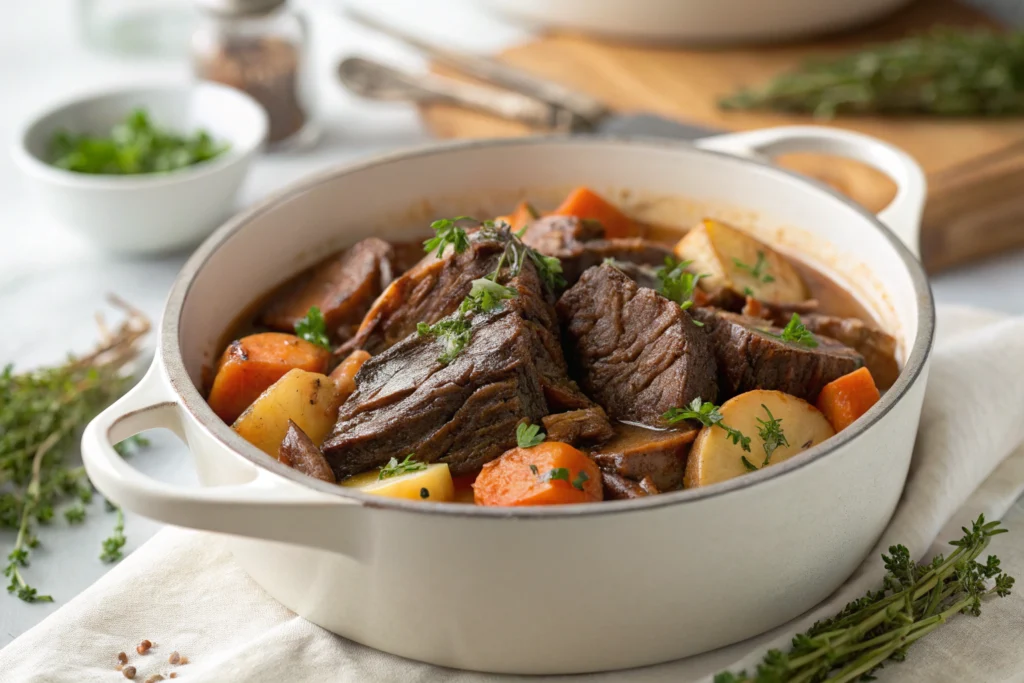
Classic Comforting Slow Cooker Pot Roast
A fork-tender, savory beef roast slow-cooked with root vegetables in a rich, deeply flavored sauce. The perfect Sunday dinner for a cold day.
Ingredients
- 3 to 4 pounds beef chuck roast (Halal-certified)
- 2 tablespoons olive oil or avocado oil
- 1 teaspoon sea salt
- 1 teaspoon black pepper
- 1 teaspoon garlic powder
- 1 teaspoon onion powder
- 1/2 teaspoon dried thyme
- 1/2 teaspoon dried rosemary
- 1 pound baby potatoes or Yukon gold potatoes, halved
- 4 large carrots, peeled and cut into 2-inch pieces
- 3 medium parsnips, peeled and cut into 2-inch pieces
- 2 medium yellow onions, cut into wedges
- 4 cloves garlic, minced
- 2 celery stalks, cut into 2-inch pieces
- 2 cups low-sodium beef broth (Halal-certified)
- 2 tablespoons tomato paste
- 2 tablespoons balsamic vinegar
- 1 tablespoon Worcestershire sauce (Halal-certified, alcohol-free)
- 2 bay leaves
- 3 sprigs fresh thyme (or 1 teaspoon dried)
- 3 sprigs fresh rosemary (or 1 teaspoon dried)
- 3 tablespoons cornstarch
- 3 tablespoons cold water
- Salt and black pepper to taste (for gravy)
Instructions
- Pat the chuck roast completely dry with paper towels. In a small bowl, combine the salt, black pepper, garlic powder, onion powder, dried thyme, and dried rosemary. Rub this seasoning mixture generously all over the roast, covering all sides.
- Heat the olive oil in a large skillet over medium-high heat. Once the oil is shimmering and hot, carefully place the seasoned roast in the pan. Sear for 3-4 minutes on each side until a deep golden-brown crust forms.
- Prepare your slow cooker by arranging the potatoes, carrots, parsnips, onions, celery, and minced garlic in the bottom.
- Transfer the seared roast on top of the vegetables in the slow cooker. In a medium bowl, whisk together the beef broth, tomato paste, balsamic vinegar, and Worcestershire sauce until smooth. Pour this mixture over the roast. Tuck the bay leaves and fresh herb sprigs around the meat.
- Cover the slow cooker with its lid and cook on LOW for 8-10 hours or on HIGH for 5-6 hours. The roast is done when it's fork-tender and easily shreds.
- Carefully remove the roast from the slow cooker and transfer it to a cutting board. Tent it loosely with aluminum foil and let it rest for 10-15 minutes.
- Remove the bay leaves and herb sprigs from the cooking liquid. If you prefer a thicker gravy, strain the liquid into a saucepan. In a small bowl, whisk together the cornstarch and cold water to create a slurry. Bring the liquid to a simmer over medium heat, then slowly whisk in the cornstarch mixture. Cook for 2-3 minutes until thickened. Adjust seasoning with salt and pepper as needed.
- Slice or shred the pot roast and arrange it on a serving platter surrounded by the tender vegetables. Drizzle with the rich gravy and serve immediately.
Equipment
- Slow cooker
- Large skillet
- Small bowl
- Medium bowl
- Whisk
- Paper towels
- Cutting board
- Aluminum foil
- Saucepan
- Serving platter
Notes
- Patting the beef dry is crucial for achieving a good sear.
- Beef chuck roast is the ideal cut; always choose Halal-certified beef.
- Searing the meat before slow cooking creates a flavorful crust and adds depth to the dish.
- The vegetables placed at the bottom of the slow cooker act as a natural rack.
- Cook on LOW for 8-10 hours or HIGH for 5-6 hours until fork-tender and reaches 190°F internal temperature.
- Rest the roast for 10-15 minutes after cooking to allow juices to redistribute.
- Optional gravy can be made by straining the cooking liquid and thickening with a cornstarch slurry.
- Store leftovers in an airtight container in the refrigerator for up to 4 days, keeping meat and gravy together.
- Leftovers freeze well for up to 3 months, though potatoes may become grainy.
- Reheat gently on the stovetop or in the microwave at 50% power, adding broth if needed.
- Customize root vegetables with turnips, rutabaga, or sweet potatoes.
- Use high-quality, low-sodium, Halal-certified beef broth.
- Look for Halal-certified, vegetarian, or alcohol-free Worcestershire sauce, or substitute with extra balsamic vinegar.
- For an Instant Pot, sear using the sauté function, then pressure cook on high for 60-75 minutes with natural release.
- Choose a 3-4 pound roast for a 6-quart slow cooker.
- The low setting allows collagen to break down gradually for superior tenderness.
- If the roast is still tough, continue cooking in 30-minute increments.
- This recipe prioritizes Halal-certified and wholesome ingredients, avoiding alcohol or non-Halal components.